

Why Solana Explorers Matter: A Practical Guide to Reading SOL Transactions
Whoa! This is one of those things that looks simple until you try it. Solana transactions are fast, messy, and surprisingly revealing when you know where to look. At first glance the explorer UI feels like a flight instrument panel—lots of numbers and jargon—though actually, once you know the signals, it tells a clear story about value flow, program calls, and token state. My instinct said „it’s just another explorer,” but then I dug in and found somethin’ different under the hood.
Seriously? There’s more to it than transaction hashes and lamports. Some explorers show raw logs, others try to translate events into human actions. I was biased toward block explorers that give context, not just cold data. Initially I thought raw RPC traces were enough, but then realized that UX, enrichment, and indexing matter a lot when you’re debugging or auditing. Ok, so check this out—if you’re building on Solana or just tracking funds, the right explorer can save hours, maybe days.
Here’s what bugs me about many blockchain UIs: they assume you have a PhD in node ops. That’s not great. You want clear breadcrumbs: who paid whom, which program ran, and whether a transaction was successful or just reported as such by a delayed validator. On one hand the chain is deterministic; on the other hand network topology, indexer lag, and retries make the story fuzzy. Actually, wait—let me rephrase that: deterministic on-chain state but messy in the surface representation due to tooling differences.
Short primer: a Solana transaction groups instructions that call programs; those programs change accounts and emit logs. Medium level: lamports move between accounts and spl-token transfers update mint-associated balances. Longer thought: when you read a transaction, you’re reconciling three layers—client intent (what the wallet asked), program execution (what happened on-chain), and explorer interpretation (how your tool presents that execution), and mismatches between layers are where bugs hide.
How to read a SOL transaction like a pro
Hmm… start at the top: transaction signature and status. Short check: was it confirmed or finalized? Then look at the block time. Next, scan the instructions—those are the verbs. Often you’ll see multiple instructions where one is a CPI (cross-program invocation). Medium observation: CPIs are where clever attacks or unexpected side effects often hide, because they let one program call into another. My experience: 90% of surprises happen at CPIs, especially with wrapped SOL or metadata updates.
On the logs tab you get a transcript of program prints. Really? Yes—program logs are priceless for debugging. They show account state changes in the developer’s own words when code prints debug lines, and they also show runtime errors like „insufficient funds” or „invalid signer.” Longer insight: sometimes logs are terse, so correlating instruction indices with account addresses requires careful attention, and that’s where explorers that annotate logs with decoded instruction names add massive value.
When you examine token transfers, watch the pre- and post-balances. That’s a simple trick that tells you whether a transfer failed silently or a fee was deducted unexpectedly. Also check for associated token accounts (ATAs) creation because many transactions auto-create ATAs and that can inflate fees or trigger rent-exempt transfers. I’m not 100% sure every dev considers ATA overhead, but in my work I’ve seen wallets fail for lack of SOL to pay for new ATAs—very very important detail.
Something felt off about some UIs showing token amounts without decimals. So always confirm token decimals from the mint account. On one hand an explorer might try to show human-readable amounts; on the other hand those human-friendly numbers can be misleading if the mint metadata is stale. Actually, this is why I keep a personal checklist when reviewing transactions: signature → status → block → instructions → logs → pre/post balances → mints/decimals → derived addresses.
Where explorers differ — and why it matters
Explorers are not created equal. Some focus on speed, others on deep decoding, and a few try to stitch on-chain events into narratives (like „You swapped SOL for USDC at Raydium”). My first impression was that more features mean better, but then I saw that noise can drown the signal. For example, auto-decoded swap events are handy, though if the decoder maps to the wrong liquidity pool you’ll misattribute liquidity movements.
Check this out—I’ve bookmarked one explorer for quick lookups, and another for deep forensic work. The quick tool is snappy and great for mobile checks. The other one shows CPI chains, shows which program owns which account, and decodes token transfers including multisig and program-derived addresses (PDAs). A balanced workflow uses both tools depending on what problem you’re solving.
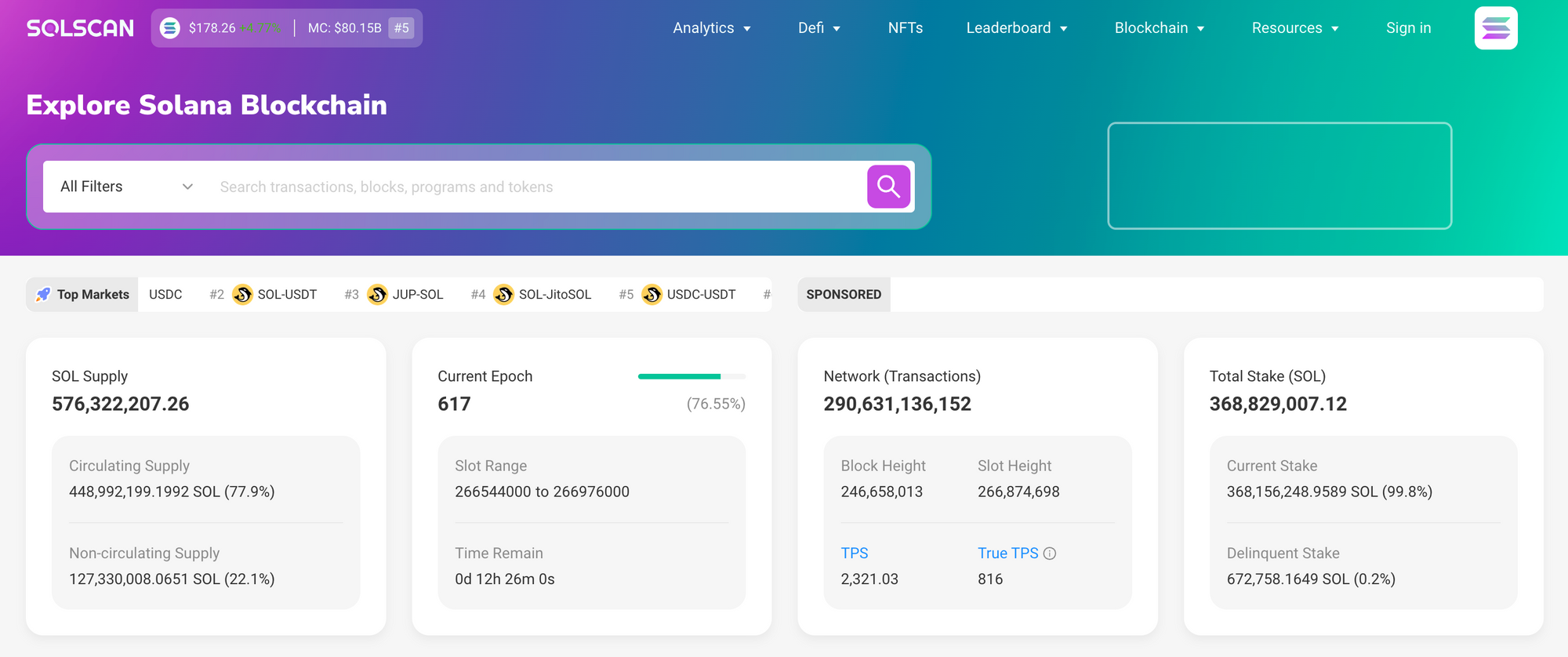
If you want a solid first stop for everyday checks try the solscan explorer—it’s one I reach for when I need decoded instructions and token movement summaries quickly. That link goes to a place that tends to be approachable, with useful filters and readable logs. Oh, and by the way, it generally surfaces CPI relationships cleanly which I appreciate when I’m tracing a complex swap sequence.
My tactic when auditing transactions: recreate the call locally with a minimal client, then replay the instructions against a test validator. This confirms my read of the logs and catches edge cases. But yes, that’s heavy-handed for casual users; a good explorer that shows decoded CPI trees and program names gets you 80% of the way there without running anything locally.
Common questions
How can I tell if a transaction really failed?
Look at the status and the program logs. If status shows „confirmed” but logs include a runtime panic or „custom program error,” the transaction effectively failed and state changes were rolled back, though fees were still paid. Also check pre/post balances to see if lamports were consumed for rent or fees.
Why do amounts sometimes look off?
Token decimals. Many explorers try to show human amounts, but if a mint’s decimals are misread you’ll get wrong numbers. Always cross-check the mint info and the pre/post token account balances, and be mindful of wrapped SOL conversions which create temporary token accounts.
